
Last Updated: October 30, 2026
Quick Summary
An estate cleanout checklist for executors starts with confirming your legal authority and reading the will before anything is removed. Then secure the home, build a room-by-room inventory, sort belongings into keep, distribute, sell, donate and dispose zones, and get appraisals before selling. Follow a realistic timeline and document every item and dollar.
- Change the locks and confirm with the insurer that the unoccupied home is still covered.
- Log each item’s location, condition and date secured, with both executors signing.
- Set up five zones: keep, distribute to a named beneficiary, sell, donate and dispose.
- A realistic timeline runs from week one through a final walkthrough and handover.
- Paint, solvents, old fuel, propane tanks and asbestos need municipal hazardous waste drop-off.
Table of Contents
- 1. Confirm Your Authority and Review the Will Before You Touch Anything
- 2. Secure the Home and Protect Valuables Immediately
- 3. Build Your Estate Inventory Checklist Room by Room
- 4. What to Do With Belongings After Someone Dies: Sort, Document, and Decide
- 5. Set a Realistic Estate Cleanout Timeline
- 6. Use an Estate Sale Checklist for Executors to Liquidate Property
- 7. Handle Disputes, Hazardous Materials, and Special Disposal
- Tell Us About Your Situation
- Frequently Asked Questions
1. Confirm Your Authority and Review the Will Before You Touch Anything
An estate cleanout checklist for executors starts with paperwork, not packing tape. Before a single box moves, confirm you have legal authority to act and read the will cover to cover. Families often haul away furniture in week one, only to discover a codicil that promised that same furniture to a cousin.
Your authority comes from one of two places. If the will names you as executor, you act once the estate is probated through the appropriate provincial court. The Ontario Ministry of the Attorney General guide to probating an estate explains the application process and what the certificate confirms.
Read the will with three things in hand: a highlighter, a notepad, and patience. Flag every specific bequest, every named beneficiary, and any clause about property division. A codicil is a later amendment, and it overrides the original will where they conflict. Miss it and you inherit the dispute.
Then call an estate lawyer. A single consultation clarifies your duties, your personal liability, and the timeline for probate. Executor duties are not just administrative; you are personally accountable for the estate’s assets from the moment you accept the role.
2. Secure the Home and Protect Valuables Immediately
The deceased’s residence becomes a target the moment it sits empty. Change the locks, tell the neighbours, and set lights on timers. Insurance policies on an unoccupied home often lapse or restrict coverage, so call the insurer and confirm the property is still protected while the estate is being settled.
Protecting valuables means getting them out of sight and under documentation. Cash, jewelry, and important documents should leave the house on day one. Move them to a safety deposit box or a locked location only you can access. Photograph each valuable item in place before you move it, and note where it went.
This is where most guides stop, and where real trouble starts. A common mistake is trusting a verbal promise that “the good stuff is in the basement.” Build a paper trail instead: a simple log with the item, its location, its condition, and the date it was secured. If two executors are involved, both sign.
Watch out: removing property before probate without authority can expose you to a claim from beneficiaries, even when your intentions are honest. Secure it, document it, and leave the disposal decisions until your authority is confirmed.
3. Build Your Estate Inventory Checklist Room by Room
An estate inventory checklist is a written record of every asset in the home, room by room, with enough detail to support valuation, distribution, and the final accounting you owe the beneficiaries. Build it before you sort, not after.
Work through the house in a fixed order and finish one room before starting the next. For each room, log furniture, electronics, artwork, tools, collections, and paperwork. Note the condition and take a photo of each item or group of items. Keep the list on a spreadsheet or a notebook you can share with co-executors.
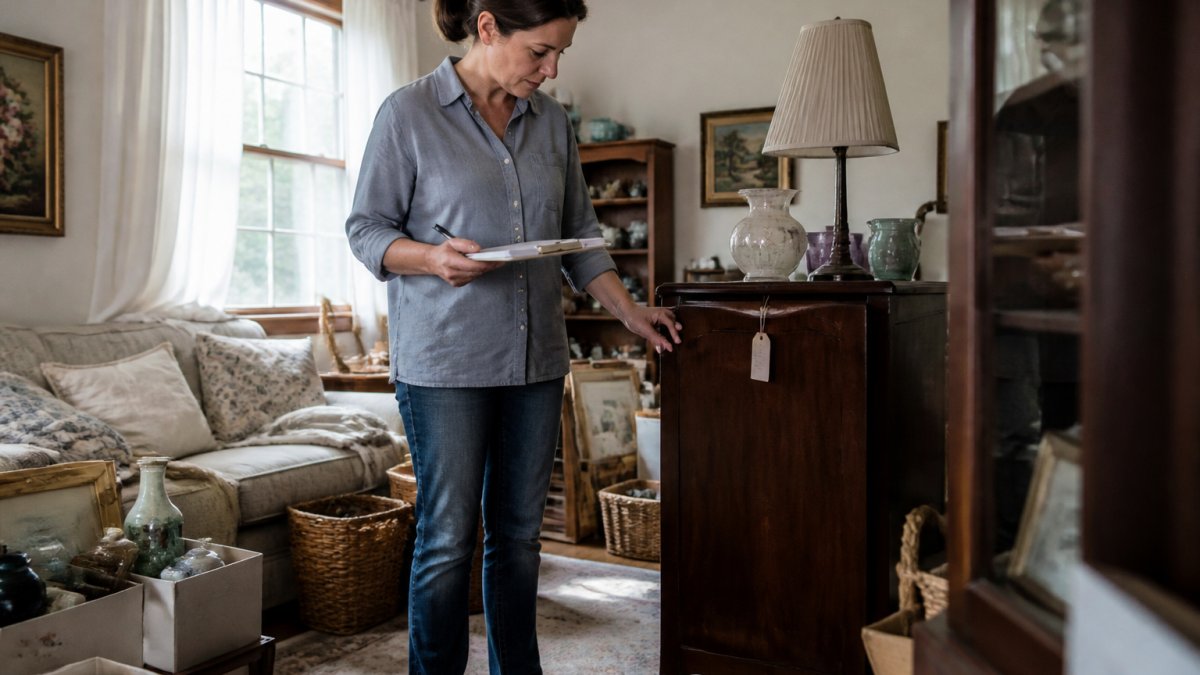
Here is how we would structure the room-by-room pass:
| Room | What to Record | Special Attention |
|---|---|---|
| Kitchen | Appliances, dishware, small appliances | Check cupboards and drawers for hidden cash |
| Bedroom | Furniture, clothing, jewelry, personal papers | Nightstand and closet safes |
| Living room | Furniture, art, electronics, collections | Wall art and display cabinets |
| Basement and garage | Tools, equipment, stored boxes | Hazardous materials and old fuel |
| Attic and storage | Seasonal items, boxes, luggage | Water damage and pest activity |
Documenting belongings this way does two jobs at once. It gives the estate sale and appraisal process a working list, and it protects you if a beneficiary later asks where a specific item went.
4. What to Do With Belongings After Someone Dies: Sort, Document, and Decide
Deciding what to do with belongings after someone dies follows a fixed order: sort, document, then decide. Sorting first without a record is how families lose track of valuables and create disputes that outlast the estate. Establishing this methodical approach early on prevents the chaos that often complicates the necessary steps after a death.
Set up five zones in the home: keep, distribute to a named beneficiary, sell, donate, and dispose. Label every box with its zone and the room it came from. Anything that might be disputed goes into a sixth pile marked “ask first” and stays untouched until the family agrees.
Sentimental items are the hardest category. Our rule: if two people want the same item, it goes to the ask-first pile and gets resolved in a family conversation, not by whoever arrives first. For items with real financial value, get an appraisal before anything is sold or given away.
When the volume is beyond what the family can handle, a professional estate clean out can take sorting and removal off your plate while keeping the documentation intact.
5. Set a Realistic Estate Cleanout Timeline
An estate cleanout timeline is a schedule that maps each phase of the cleanout, from securing the home to the final walkthrough, against the deadlines that actually apply to the estate. Most families underestimate it because they plan for the physical work and forget the legal and financial steps running in parallel.
Tell Us About Your Situation →
A realistic sequence looks like this:
- Week one: confirm authority, secure the home, collect documents and valuables.
- Weeks two to four: complete the room-by-room inventory and photograph everything.
- Weeks four to eight: obtain appraisals, notify beneficiaries, and agree on the distribution plan.
- Weeks eight to twelve: hold the estate sale, arrange donations, and clear remaining items.
- Final phase: clean the residence, complete the final walkthrough, and prepare the home for sale or handover.
The timeline stretches when probate is delayed, when the home must be sold, or when a beneficiary disputes the will. Budget is the other variable. Cleanout costs depend on the volume of contents, the number of rooms, disposal requirements, and access to the property, so pricing depends on the scope of the job. How much an estate cleanout costs in Windsor depends on these same factors. Contact Brian Price directly for current pricing or a quote.
6. Use an Estate Sale Checklist for Executors to Liquidate Property
An estate sale checklist for executors turns a house full of belongings into a documented, defensible liquidation. The goal is fair market value for the estate, not the fastest sale.
Start with appraisal, not pricing. A certified appraiser values the significant items, and that valuation becomes your reference point when you price the sale. Group everyday household goods into lots, price the collectibles and antiques individually, and keep a written record of every item sold, the price, and the buyer where relevant.
Before the sale, confirm your authority to sell, check whether the will directs specific items to specific people, and advertise the sale through local channels. On sale day, secure the cash, keep a signed receipt log, and have a second person present for high-value transactions.
For families who want the liquidation handled end to end, professional estate sale services can cover appraisal, pricing, and the sale itself. What most guides miss is the paperwork after the sale: the proceeds belong to the estate, and every dollar needs a line in your accounting to the beneficiaries.
7. Handle Disputes, Hazardous Materials, and Special Disposal
Disputes and hazardous materials are the two places where an estate cleanout stops being a chore and becomes a liability. Handle both with documentation and, where needed, professional help.
For disputes, put the decision rules in writing before the sorting begins. Named beneficiaries get their bequests first. Remaining items are divided by agreement, and anything unresolved goes to an independent third party or a mediator. Keep every conversation in email so there is a record. An executor advisor can help you apply the will’s terms without taking sides.
Hazardous materials need special handling. Paint, solvents, old fuel, propane tanks, asbestos-containing materials, and medical waste cannot go in a curbside bin. Contact your municipality for household hazardous waste drop-off dates and rules. If the home shows hoarding conditions, the cleanup carries real safety risks, from structural hazards to biohazards. Hoarding cleanup in Windsor covers hoarding levels, costs, and how to help.
Watch out: never let a junk removal crew haul away documents, medications, or anything that looks like a family heirloom without checking it first. Once it leaves the property, it is gone.
Tell Us About Your Situation
The hardest part of an executor’s job is not the paperwork. It is standing in a parent’s home, surrounded by decades of belongings, and knowing every decision will be reviewed by people who loved the same person you did.
Brian Price helps families through exactly that moment. As a Certified Canadian Personal Property Appraiser, we document fair market value so the estate’s assets are protected. As an Accredited Seniors Agent, we guide you through the decisions. As a licensed Realtor in Windsor-Essex, we can handle the home sale when the cleanout is done, giving you a single point of contact.
Get started with Brian Price and move through the cleanout with a documented plan, a fair valuation, and one team handling the details. Contact Brian Price to request a quote and tell us about your situation.
Frequently Asked Questions
What should an executor do first when handling an estate?
The first step is to confirm you have legal authority to act. Locate the original will and any codicils, then apply for a certificate of appointment of estate trustee if required. Once authorized, secure the deceased’s residence by changing locks and removing valuables. Review the will to understand specific bequests and identify beneficiaries. Consult an estate attorney if the estate is complex or if you are unsure about probate requirements. This foundation prevents costly mistakes later.
How should an executor inventory the contents of a home?
Go room by room with a notepad or spreadsheet. Record each item’s description, condition, and estimated value. Use photos or video for high-value items like jewelry, art, and antiques. Note serial numbers and keep receipts or appraisals where available. Involve a co-executor or beneficiary if possible to reduce disputes. For significant collections, hire a certified appraiser to establish fair market value. This inventory becomes your reference for insurance, taxes, and distribution.
Can an executor remove or sell items from an estate before probate?
In most Canadian provinces, you should not sell or distribute estate assets until probate is granted, unless the will gives clear authority or all beneficiaries consent and debts are covered. Removing items without documentation can expose you to liability. Secure the home and inventory belongings first. Consult an estate attorney before any sale. If the estate is small and qualifies for a simplified process, the rules may differ. Always prioritize paying debts and taxes before distributing property.
How should an executor handle disagreements among beneficiaries about belongings?
Start by reviewing the will for specific gifts. For items not specifically bequeathed, create a fair distribution process. Use a lottery or rotating selection method. Document every decision in writing and have beneficiaries sign off. Consider a professional mediator if conflict persists. An impartial appraiser can set values for equal division. Avoid making side deals without transparency. Clear communication and written records reduce the risk of legal challenges later.
What should an executor do with valuable items found during a cleanout?
Secure valuable items immediately in a safe or locked room. Document each item with photos, descriptions, and any appraisals. Do not remove them from the estate without recording the chain of custody. Check the will for specific bequests. If items are not bequeathed, they become part of the residue and must be distributed according to the will or provincial intestacy rules. For items of significant value, obtain a certified appraisal before selling or distributing.
