
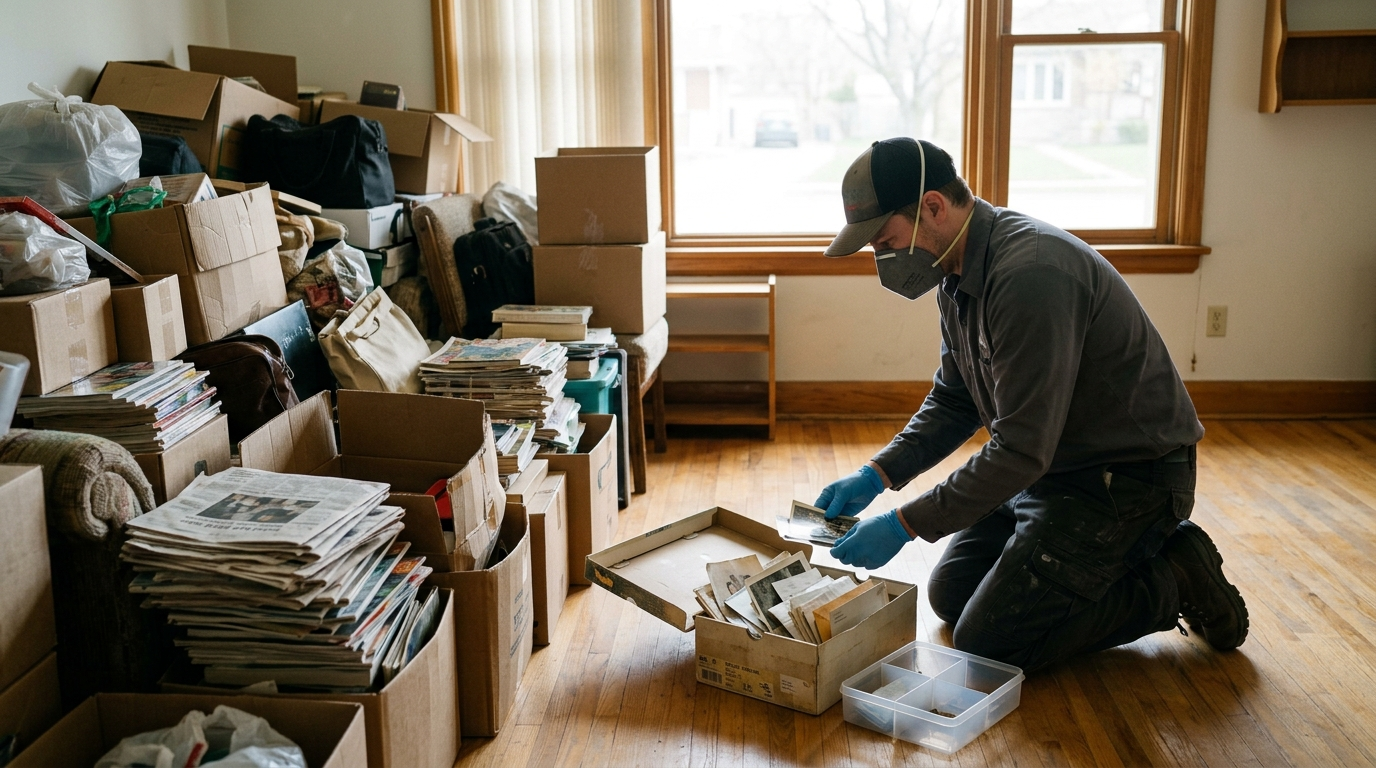
Hoarding cleanup is different from any other kind of cleanout. The volume is higher, the safety risks are real, and there is usually a person at the centre of it who is struggling. Families in Windsor and Essex County often come to this point after a parent passes, after a landlord or social worker steps in, or after finally seeing the inside of a home they have not visited in years.
This guide explains what hoarding is, how professionals measure it using the five hoarding levels, what hoarding cleaning services cost, and how to help someone you love without making things worse.
What Is Hoarding Disorder?
Hoarding disorder is a recognized mental health condition. A person with hoarding disorder has persistent difficulty discarding possessions, and feels real distress at the thought of letting items go, whether or not those items have value. Over time, clutter fills rooms until they can no longer be used for what they were meant for. Kitchens stop being used for cooking, beds become storage, and hallways narrow to a single path.
Hoarding is not the same as collecting. A collector keeps items organized, displays them and can usually find what they are looking for. Hoarding is disorganized, it keeps growing, and it interferes with daily life, safety and relationships. People often cannot see when their own clutter has crossed that line, which is one reason family members are usually the first to raise it.
The Five Hoarding Levels Explained
Most hoarding cleanup companies and professional organizers use the Clutter Hoarding Scale created by the Institute for Challenging Disorganization (ICD). It sorts homes into five hoarding levels, from green to red, and looks at five things in every home: structure and zoning, animals and pests, household functions, health and safety, and the protective equipment workers will need.
Level I: Green (Low)
The home is considered standard. Doors, stairs and windows are all accessible, appliances work, and there is little or no clutter. Most households sit here.
Level II: Blue (Guarded)
Clutter is starting to build. One major exit may be blocked, some rooms show visible clutter, and housekeeping has slipped. The home is still livable and safe, and family help or a professional organizer can usually turn it around.
Level III: Yellow (Elevated)
The ICD calls Level III the pivot point between a cluttered home and a hoarding environment. Clutter blocks some key living areas, there may be clutter outside the house, odours or pest activity, and at least one room no longer works as intended. Professional hoarding cleaning services are usually needed from this level up.
Level IV: Orange (High)
Clutter blocks exits, hallways and stairs. There may be structural damage, mould, water problems, rodents or insects, and beds or bathrooms may be unusable. Crews need full protective equipment, and a hoarder house at this level is not a job for family members to tackle alone.
Level V: Red (Severe)
The home is unsafe to live in. Utilities may not work, there can be serious structural damage, and animal or human waste may be present. Level V cleanup involves biohazard specialists, and the ICD advises that professionals should never work alone in a Level V home.
Knowing the hoarding level helps a family plan the right kind of hoarding cleanup and budget for it. Some clinicians also use the Clutter Image Rating, a set of nine photos of rooms from tidy to overwhelmed, so a person can match each room in their home to a picture. It is a simple way to start an honest conversation about how bad things have become.
How Much Does Hoarding Cleanup Cost in Windsor?
Hoarding cleanup cost depends mostly on the hoarding level and the size of the home. Hoarding cleanup costs more than a standard estate cleanout because it takes longer, needs more hands and often requires protective equipment and specialist cleaning. Published pricing from Canadian hoarding cleanup companies falls into rough bands by severity:
- Mild hoarding (Levels I to II): about $1,000 to $3,000
- Moderate hoarding (Level III): about $3,000 to $7,000
- Severe hoarding (Level IV): about $7,000 to $15,000 or more
- Complex or hazardous cleanup (Level V): can reach $15,000 to $35,000 when remediation is needed
The biggest cost factors are the volume of items, the hoarding level, the size of the home, access, and whether biohazard cleanup or repairs are needed. Items packed floor to ceiling can double the labour time on a room. Any quote for a hoarder house should come after a walkthrough, never over the phone, because a real look at the home is the only way to avoid surprise disposal and weight charges at the end.
Disposal is a real part of the bill in Windsor. The Essex Windsor Solid Waste Authority charges by weight for garbage at its depots, while recyclables, scrap metal and electronics are free for residents to drop off. Careful sorting keeps more of a hoarding cleanout out of the paid garbage stream. For more on how cleanouts are priced, see our guide to estate cleanout costs in Windsor.
What Happens During a Professional Hoarding Cleanup
A Private Walkthrough
Every professional hoarding cleanup starts with a visit to the home, or a video walkthrough if the family lives out of town. The company assesses the hoarding level, access, safety risks and anything the family needs found, then gives a written quote and plan.
Safety First
Heavy clutter can hide blocked exits, weak floors, mould, pests and sharp objects. Crews deal with those risks before the main work begins. At higher hoarding levels, a biohazard remediation company handles the contaminated areas.
Sorting by Hand
Hoarder houses often hide cash, jewellery, legal papers, photos and family keepsakes among everything else. A good hoarding cleanup crew sorts by hand and sets aside anything that looks important for the family to review. This is the step that separates a hoarding cleanup from a junk haul.
Appraisal Before Removal
Valuable items do turn up in hoarded homes. Brian Price is a certified Canadian Personal Property Appraiser, so items with real value can be identified and sent to an estate sale or auction instead of the landfill, with the proceeds going back to the estate or the family.
Removal, Donation and Disposal
Usable items are donated, recyclables are recycled, and the rest is disposed of properly. Once the home is clear, it can be cleaned, repaired, sold or lived in again.
How to Help a Hoarder You Love
If the person is still living in the home, how you handle the cleanup matters as much as the cleanup itself. Support workers who specialize in hoarding are clear on one point: a forced cleanup rarely works. Clearing a home against someone’s will, or throwing things out behind their back, often causes deep distress and the clutter usually comes back.
- Talk about safety, not stuff. Blocked exits, fire risk and falls are easier to agree on than whether an item is worth keeping.
- Use respectful words. Calling someone a hoarder or their belongings junk shuts the conversation down.
- Start small. Clearing one path, one room or one exit is a real win and builds trust.
- Let them decide. Give the person choices about what stays and what goes, even if progress is slower.
- Bring in professional support. A family doctor or a counsellor who understands hoarding disorder can treat what is behind the clutter.
In Windsor and Essex County, Family Services Windsor Essex has offered support for people dealing with hoarding, and the eMentalHealth.ca directory lists local counselling and support options for Essex County. Cleanup deals with the house. Counselling deals with the reason it filled up.
Hoarding Cleanup After a Death
Many executors only see the full extent of a hoarding situation after a loved one dies. In that case the goal shifts to settling the estate: finding the will, bank records and tax papers, protecting anything of value, and getting the house ready to sell. A hoarding cleanout for an estate should still be done carefully, because important documents and valuables are often buried in the clutter. If the property is going to market afterward, a Realtor who understands estate sales can help the cleanout and listing run on one timeline. Learn more about our estate clean out service.
Hoarding Cleanup vs. Junk Removal
A junk removal company loads what you point at and hauls it away. That works for a garage. It does not work for a hoarder house, where crews need to sort by hand, look for documents and valuables, manage safety risks, work at a pace the family can handle, and often coordinate with biohazard specialists, landlords or social workers. Hoarding cleaning services cost more per hour, but they protect the things that matter and lower the chance of a dangerous mistake.
Frequently Asked Questions
What are the five hoarding levels?
The Clutter Hoarding Scale from the Institute for Challenging Disorganization rates homes from Level I (green, low) to Level V (red, severe). Level III is the pivot point where a cluttered home becomes a hoarding environment and professional help is usually needed.
How much does it cost to clean a hoarder house?
In Canada, mild hoarding cleanups commonly cost $1,000 to $3,000, moderate jobs $3,000 to $7,000, and severe or hazardous jobs can run well over $10,000. The hoarding level, volume of items and need for biohazard cleanup drive the price.
How long does a hoarding cleanup take?
A mild cleanup can take one to three days. A full house at Level III or higher can take a week or more, especially if the person living there is involved in decisions.
Does home insurance cover hoarding cleanup?
Usually not for the clutter itself. Some policies may cover sudden damage, such as a burst pipe or fire, but damage that built up over time is commonly excluded. Check the policy and talk to the insurer before work starts.
Can I clean a hoarder house myself?
At Levels I and II, family members can often make real progress with patience and a plan. From Level III up, mould, pests, structural problems and sharp objects make professional hoarding cleanup the safer choice.
If you are facing a hoarding situation in Windsor or Essex County, Brian Price and his team can walk through the home with you privately and explain your options. Get in touch when you are ready.