

Last Updated: October 28, 2026
Quick Summary
Clearing out hoarder home safely starts with checking for hazards like blocked exits, structural strain, pests and electrical risks, then planning with the resident or family. Work one room at a time, clear the exit path first, and stop if you see structural damage, exposed wiring, a gas smell or large amounts of biohazard waste.
- Check for blocked exits, structural strain, pests and electrical hazards before anyone starts work.
- Confirm who has legal authority over the home and get the document, not just a verbal claim.
- Set aside legal documents, identification, medical records and photos in a safe box first.
- Clear the entry and exit path first, then work one room at a time.
- Stop work and bring in help if you see structural damage, exposed wiring, a gas smell or biohazards.
Table of Contents
- Understanding Hoarding Before You Start the Cleanout
- Planning the Cleanout With the Resident or Family
- Hoarding Cleanup Safety Precautions and Stop-Work Criteria
- Hoarder Home Cleanout Checklist: Working Room by Room
- What to Keep When Clearing a Hoarder Home
- How Long Does a Hoarder House Cleanout Take?
- Booking Help for Your Hoarder Home Cleanout
- Frequently Asked Questions
Understanding Hoarding Before You Start the Cleanout
Clearing out a hoarder home can involve significant belongings and safety considerations. There may also be a person at the centre of it who is struggling.
Hoarding disorder is a recognized mental health condition. Learn more about hoarding levels and what a cleanout involves. It involves persistent difficulty discarding possessions, even when those items fill the living spaces and make them unsafe to use. Assessment of critical health and safety risks in homes affected by hoarding found that these homes often carry serious hazards, which is why community agencies sometimes need to step in.
Before anyone picks up a box, it helps to understand what you are walking into:
- Blocked exits and pathways. Furniture and piles can stop people from leaving quickly in a fire.
- Structural strain. Heavy stacks can weaken floors, especially in older homes.
- Pests and contamination. Food waste, animal waste and mould are common in heavily hoarded homes.
- Electrical and heating hazards. Items stacked near heaters or wiring raise fire risk.
A hoarder home may require a different plan from a regular cleanout.
Planning the Cleanout With the Resident or Family
A good plan starts with the people involved. Before clearing out a hoarder home, consider who has authority to make decisions about the belongings.
Where possible, the resident should have a say in what happens to their home and belongings. Pushing someone aside can make the situation worse and can lead to more clutter later. The University of British Columbia client-centred toolkit describes a clean-out as a fast-paced intervention that removes a large amount of clutter. That speed is not always the right default. A rapid clean-out may not suit every client, so the plan should match the person’s readiness.
Use these questions to shape the plan:
- Who lives in the home, and who has legal authority over it? Ask for the document, not just the verbal claim.
- Does the resident agree to the cleanout, and what are their main concerns?
- Are there items they must keep, such as medical records, identification, immigration papers or photos?
- Is a family member, caregiver, social worker or trustee available during the work?
- What is the deadline, such as a move date, a sale date or a compliance order?
- Are there pets, and who is responsible for them during the work?
Document as you go. Keep a simple written record of decisions and items set aside.
Watch out: Consider the resident’s wishes when deciding what to remove.
Hoarding Cleanup Safety Precautions and Stop-Work Criteria
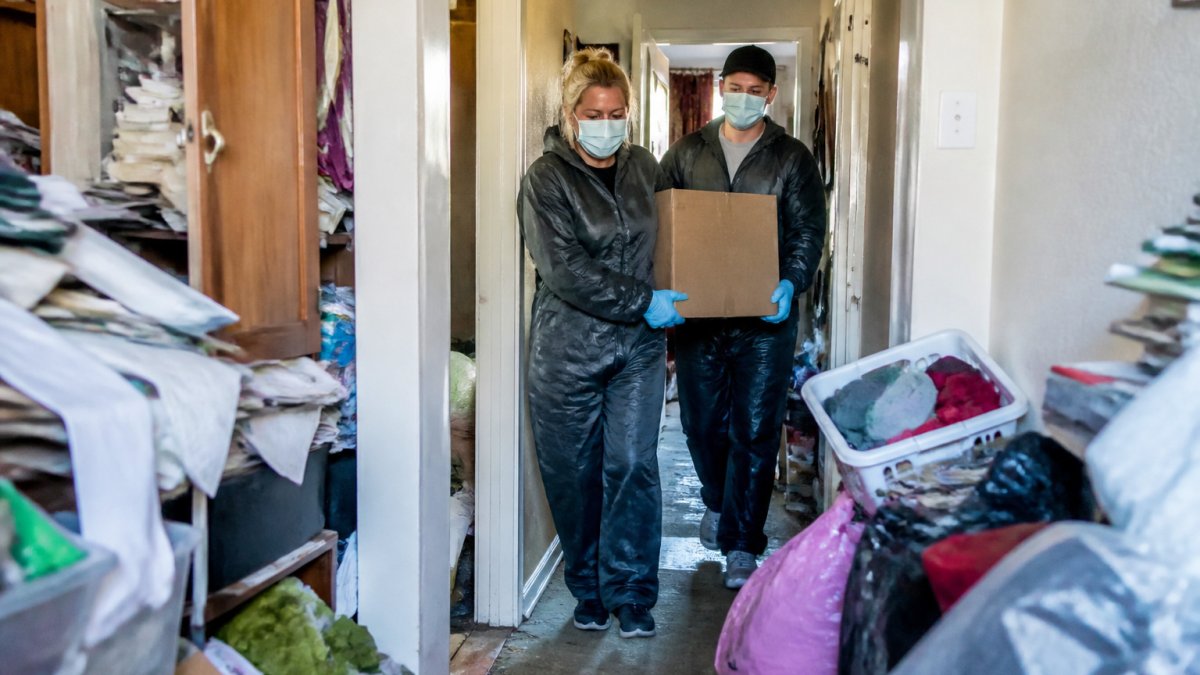
Safety comes first on every job. Crews should wear gloves, eye protection and masks, and they should never work alone in a severely hoarded space. Clear a path before moving deeper into the home.
Know when to stop. Pause or halt the work if you see any of the following:
- Signs of structural damage, such as sagging ceilings or floors
- Exposed or damaged wiring
- Strong gas smells or a suspected gas leak
- Large amounts of mould, biohazard waste or animal waste beyond what the crew can handle
- Signs of a sharps or chemical hazard
When any of these appear, stop, leave the area and bring in the right help before you continue. Document what you found so the next team has a clear record.
Hoarder Home Cleanout Checklist: Working Room by Room
Working one room at a time keeps the job organized and gives the resident a visible sense of progress. Use this checklist for each space:
Tell Us About Your Situation →
- Clear the entry and exit path first
- Set up three zones: keep, donate or sell, and discard
- Remove trash and food waste first to reduce odour and pests
- Sort items that need a second look, such as documents and photos
- Bag and label donations for pickup or drop-off
- Schedule hazardous-waste disposal for paints, chemicals and batteries
- Walk through the room and confirm it is clear before moving on
Keep a simple log for each room. Note what was removed, what was kept and any hazards that need follow-up. This makes the final walkthrough faster and gives family members a clear record.
Working one room at a time keeps the job organized. Use this checklist for each space:
| Step | What to do | Note |
|---|---|---|
| Clear the entry and exit path | Clear the path first | Before anything else |
| Set up three zones | Keep, donate or sell, and discard | Sort each room |
| Remove trash and food waste | Remove these first | Reduces odour and pests |
| Sort items needing a second look | Documents and photos | Check before discarding |
| Bag and label donations | Prepare for pickup or drop-off | Keep donations separate |
| Schedule hazardous-waste disposal | Paints, chemicals and batteries | Arrange licensed disposal |
| Walk through the room | Confirm it is clear | Before moving on |
What to Keep When Clearing a Hoarder Home
Deciding what to keep is often the hardest part. Start with the items that matter most: legal and financial documents, identification, medical records, photos and family heirlooms. Set these aside in a safe box before sorting anything else. Once the essential papers are secured, the process of organizing cluttered spaces can expand into larger storage areas where forgotten belongings often accumulate.
For the rest, consider what the resident wants to keep, sell, or discard.
Valuable items, collectibles and antiques can be appraised. Browse our estate sale category for options on selling or rehoming valuable items. Brian Price holds the Certified Canadian Personal Property Appraiser (CPPA) designation.
How Long Does a Hoarder House Cleanout Take?
The timeline depends on the size of the home and the scope of the work.
Pricing depends on quantity, timing and disposal needs, so a quote is the best way to get a clear number. See typical Windsor estate cleanout costs for a sense of the ranges involved. Industry cost guidance for hoarding cleanups reports wide cost ranges across projects, which is one more reason to get a site assessment first. The main cost drivers are:
- Volume and severity. The number of dumpsters or disposal loads is usually the largest line item, and it scales with how deep the clutter runs.
- Labour hours. Heavy clutter, narrow pathways and upper floors slow every step.
- Hazardous and special handling. Biohazards, animal waste, sharps, chemicals and mould require protective equipment and licensed disposal.
- Disposal and donation logistics. Tipping fees, pickup scheduling and sorting for donation all add time and cost.
- Repairs and cleaning. Odour treatment, pest treatment and repairs uncovered during the work are often separate from the cleanout itself.
Booking Help for Your Hoarder Home Cleanout
If the job feels too large or the risks are unclear, professional help is a sensible step.
Brian Price provides estate transition services, including estate clean outs and appraisals. Brian Price is a Licensed Realtor in Windsor-Essex and an Accredited Seniors Agent. Contact The Brian Price Team to request a quote, or read our full-service estate clean out details to learn more.
Tell us about your situation.
Frequently Asked Questions
How do you start clearing out a hoarder home?
Consider discussing a plan with the resident or family before deciding what to do with belongings.
How long does a hoarder house cleanout take?
Pricing and timing for your situation depend on the scope of the work, so contact Brian Price for a quote.
Should family members clean out a hoarder home themselves?
Family members can be involved in decisions about belongings. Consider the scope of the cleanout and the support needed before deciding how to proceed.
When should you hire a professional hoarding cleanup service?
Consider professional help when the scale of the cleanout feels overwhelming or family members disagree about what to keep.
