
Last Updated: November 1, 2026
Quick Summary
An estate cleanout goes more smoothly when siblings agree on a decision-making process before sorting anything. Name the executor, set a shared checklist, and choose one fair allocation method in advance. Disputed items should be set aside on a scheduled revisit so the house can still be cleared on time.
- Confirm who the executor is, since that person generally holds legal authority over the estate.
- Break the cleanout into tasks on a shared checklist that everyone can see and update.
- Choose one allocation method, such as rotating picks or a points-based auction, and write it down.
- Get independent written appraisals for big-ticket items so discussions rely on facts rather than memory.
- Box disputed items, revisit them on a fixed date, and never let one item block the timeline.
Table of Contents
- Why Sibling Estate Cleanouts Become Difficult
- Agree on a Decision-Making Process Before Anyone Sorts a Drawer
- Build an Estate Cleanout Checklist Everyone Can Follow
- How to Divide Household Items After a Death Fairly
- Setting a Realistic Estate Cleanout Timeline
- Handling Disputed Items, Documents and Executor Responsibilities
- Booking Your Next Step With a Professional Estate Team
- Frequently Asked Questions
Why Sibling Estate Cleanouts Become Difficult
Siblings often disagree because they each carry different memories of the same home. One sibling may want to keep every piece of furniture, while another wants the house empty in a month.
Most conflict comes from a few common sources:
- Unequal involvement: One sibling lives nearby and does most of the work.
- Emotional attachment: Items tied to childhood can feel impossible to let go of.
- Unclear authority: Nobody is sure who has the final say.
Naming these sources early makes them easier to handle. A cleanout runs more smoothly when everyone agrees on the problem before debating the solution.
Agree on a Decision-Making Process Before Anyone Sorts a Drawer
Before anyone picks up a box, agree on how decisions will be made. A written agreement, even a simple one, prevents many arguments later.
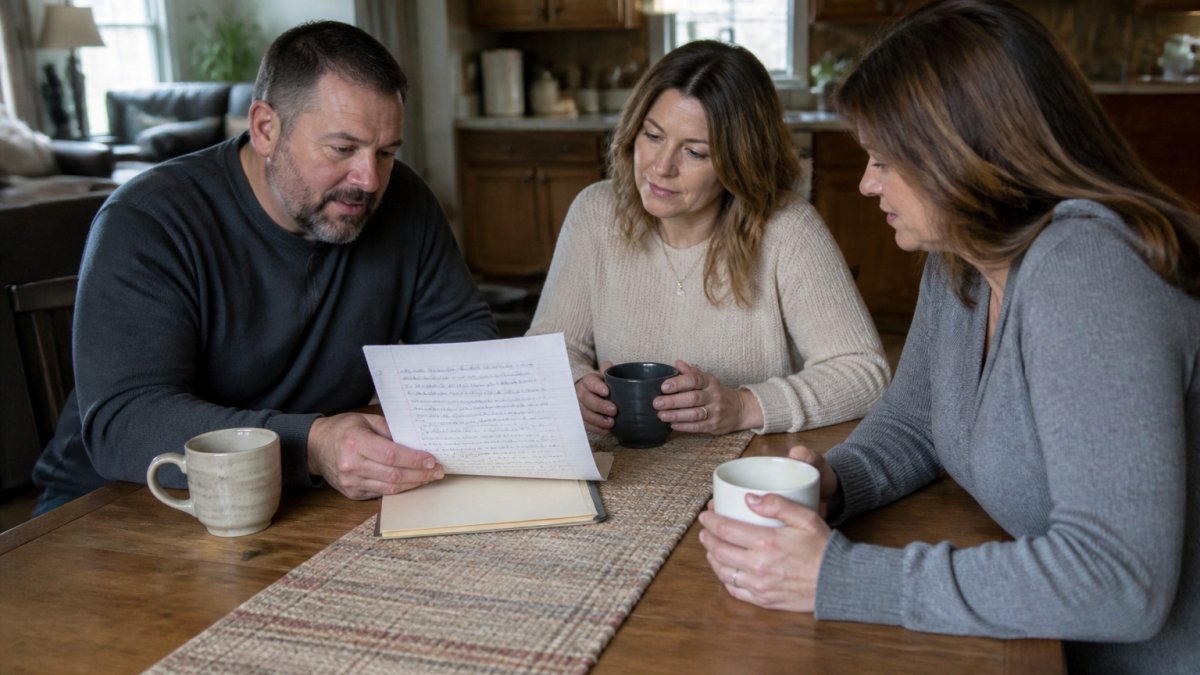
Consider settling these points first:
- Who is the executor or the person legally in charge of the estate?
- Which decisions need everyone’s agreement, and which one person can make?
- How will you handle a sibling who lives far away or cannot attend?
Watch out: if the will names an executor, that person generally holds legal authority over the estate, even when the siblings all want a say (What to do when someone dies: Representing someone who died). Confirm the legal role before you assume a majority vote can settle matters.
Build an Estate Cleanout Checklist Everyone Can Follow
A shared checklist keeps everyone on the same page and shows progress. It also makes it clear who is doing what.
Break the work into clear tasks:
- Locate the will and important legal papers
- Photograph valuable or disputed items
- Sort belongings into keep, donate, sell, and discard piles
Share the checklist through a group chat or shared document so each sibling can see updates in real time.
How to Divide Household Items After a Death Fairly
Dividing household items is often the hardest part of an estate cleanout. Fair division starts with a clear method agreed in advance, not with a fight over a single lamp. The goal is a process everyone trusts before anyone knows who will “win” a particular item.
Choose an allocation method before you list the items
Pick one method and write it down. Switching methods mid-stream is what makes siblings feel cheated. Common options:
- Rotating choice (draft order): List the items everyone wants. Draw lots or agree on an order. Each sibling picks one item per turn until the list is exhausted. Simple, transparent, and hard to game.
- Alternating picks by category: Instead of one master list, run a separate draft for furniture, tools, jewelry, kitchenware, and so on. This prevents one sibling from using an early pick on the single most valuable item and then dominating every other category.
- Silent auction with points: Give each sibling an equal pool of points (for example, 100 points) to bid on items in a shared spreadsheet. Highest bid wins; ties go to a coin flip. This surfaces real preferences and lets someone “spend” heavily on one sentimental piece.
Value the big-ticket items independently
Perceptions of favoritism usually come from uncertainty about worth, not from the item itself. For furniture, art, jewelry, tools, and collections, get an independent written appraisal before the draft.
A practical pattern many families use: appraise anything likely to exceed a few hundred dollars, and treat everything below that threshold as “sentimental” and allocate it through the draft rather than through valuation.
Balance unequal-value picks
If one sibling takes a high-value item early, track it. Keep a running tally of appraised values next to each pick and, at the end, let siblings with lower totals choose additional lower-value items or receive an offset from the estate. This is the mechanism that prevents the quiet resentment that surfaces months later.
Agree on the method, the appraisal threshold, and the offset rule in writing before the first pick. A one-page signed note is enough, and it removes the “you changed the rules” argument later.
Handle shared and unsellable items
Some items belong to everyone (family photos, heirlooms with no market) and some cannot be divided (a piano, a large piece of furniture). For shared items, consider a rotating custody arrangement or digitize photos and give each sibling a copy. For unsellable items no one wants, agree in advance on donation or disposal so no single sibling is stuck storing them.
Tell Us About Your Situation →
Keep a written record
Record every pick, every appraisal, and every offset in a shared document. A simple spreadsheet with columns for item, appraised value, chosen by, and offset owed is enough. The record protects the executor, prevents disputes, and gives remote siblings visibility into the process. Establishing this level of transparency early on sets a constructive precedent for involving siblings in decisions regarding the broader scope of parental care.
Setting a Realistic Estate Cleanout Timeline
A cleanout rarely finishes in a weekend. Most families need several weeks or months, depending on the size of the home and the number of belongings.
Plan the timeline in stages:
- Week 1-2: Secure the home, locate documents, and agree on the decision process.
- Week 3-6: Sort rooms one at a time, starting with the least emotional spaces.
- Week 7 and later: Arrange sales, donations, and final disposal, then prepare the home for listing or transfer.
Pricing for cleanout services depends on the size of the home, the volume of items, and the services needed.
The article breaks the cleanout into stages, so a quick reference table helps readers plan their own timing. For a sense of what the work costs alongside the schedule, see estate cleanout costs in Windsor.
| Stage | Timing | What happens |
|---|---|---|
| Secure and agree | Week 1-2 | Secure the home, locate documents, agree on decisions |
| Sort rooms | Week 3-6 | Sort one room at a time, least emotional spaces first |
| Sales and disposal | Week 7 and later | Arrange sales, donations, and final disposal |
Handling Disputed Items, Documents and Executor Responsibilities
Some items will not have an easy answer. The mistake most families make is trying to resolve every dispute in the moment, in the room, with everyone tired. A better pattern is to separate the dispute from the cleanout: set the item aside, keep working, and return to it on a scheduled date with a defined process.
A deadlock process that actually works
Agree on these steps before you need them:
- Pause and label. Photograph the item, record where it was found, and place it in a clearly marked “disputed” box. Do not let it stall the rest of the room.
- Cool-off period. Set a fixed date, two weeks is a common choice, to revisit all disputed items together.
- Information first. Before the revisit, get a written appraisal if value is in question, and gather any evidence of the deceased’s wishes (a note, a will clause, a prior conversation the siblings agree on).
- Structured conversation. Use a short script: “What I want is ___. What I’m worried about is ___. What I’d accept is ___.” Go around once without interruption.
- Fallback rule. If no agreement after one revisit, apply the pre-agreed fallback: a blind draw, a buy-out at appraised value, or referral to a neutral mediator.
- Document the outcome. Write down what was decided and have each sibling confirm it in the shared document or group chat.
Never let a single disputed item block the sale, donation pickup, or listing timeline. Box it, label it, and move on. The house still has to be cleared.
Ground rules for hard conversations
- Speak about the item, not the person. “I’d like the clock because of the summers at the cottage” lands better than “you always take the best things.”
- One issue at a time. Do not relitigate the division of the china while discussing the tools.
- No side deals. Any agreement between two siblings that affects the estate gets written down and shared with the executor.
Who actually has authority
If the will names an executor (or the estate has an administrator appointed by the court), that person generally holds legal authority over the estate’s property, including access to the home and distribution of contents. Siblings can and should have a say, but a majority vote among siblings does not override the executor’s legal role. Before anyone removes property from the home, confirm:
- Who the executor or administrator is, and whether their authority has been formally confirmed.
- What the will says about specific items or categories of property.
- Whether provincial estate rules require anything further before distribution.
When in doubt, get advice from a lawyer practicing estate law in your province before items leave the house. Removing property without authority can create liability for the person who does it and complicate the estate for everyone.
Documents and records
Important documents, wills, deeds, financial records, insurance policies, tax filings, need careful handling. Keep originals in a secure place controlled by the executor, share copies only with people who have a legal right to see them, and keep a log of who received what. The executor also has a duty to keep accurate records of the estate’s assets and transactions; a shared inventory spreadsheet supports that duty and gives remote siblings confidence in the process.
The cleanout is a logistics project; the disputes are a separate, scheduled process. Keep them apart, write everything down, and let the executor’s legal role, not seniority or volume, settle questions of authority.
Booking Your Next Step With a Professional Estate Team
Sibling disagreements are easier to manage when a neutral professional guides the process. Brian Price offers a single point of contact for estate cleanouts, downsizing, and estate sales across Windsor-Essex.
If you are ready to take the next step, request a quote from the Brian Price team to talk through your situation. You can also learn about full-service estate cleanouts that cover the logistics from start to finish.
Contact Brian Price today to get started and make this transition a little easier for everyone involved. Local families in Amherstburg can find estate cleanout and estate sale services close to home.
Frequently Asked Questions
What should siblings do first when cleaning out a deceased parent’s house?
Start by confirming who has legal authority over the estate, usually the executor named in the will, and agree on a shared decision-making process before anyone removes or sorts items. Set a rough timeline, decide how disputed items will be handled, and secure valuable belongings, important documents and sensitive records. Taking these steps early prevents misunderstandings later, when someone may have already removed an item that others expected to see first.
How can siblings divide household items fairly after a death?
Many families use a rotation system, where each sibling chooses one item at a time until everything is claimed, or they assign points to items based on sentimental and monetary value. Photograph and label belongings, record each decision in writing, and set aside contested items for a later discussion. If an item has significant market value, an independent appraisal can help the group agree on a fair division.
What should you do when siblings fight over inheritance during a cleanout?
Pause physical sorting and return to the agreed decision-making process, focusing on facts such as the will, the estate’s assets and the executor’s legal duties. If the disagreement continues, bring in a neutral third party, such as a mediator or an estate professional, to keep discussions organized. Avoid removing items from the home without written agreement, since this is often the point where disputes escalate.
Should an executor let siblings take items from the estate?
An executor has a duty to act in the best interests of the estate and its beneficiaries, so informal removal of items can create legal and financial problems. Before any item leaves the home, the executor should confirm it is a permitted distribution, record it, and document the decision in writing. Speaking with a lawyer familiar with Ontario estate law is a sensible step when the family is divided.
