

Last Updated: October 25, 2026
Quick Summary
Estate transition services for seniors combine professional expertise in estate cleanout, downsizing coordination, real estate support, and responsible handling of household belongings to reduce stress during major life changes. These coordinated services typically include professional appraisal, sorting, estate sales, donation coordination, junk removal, and real estate support.
- Estate transition services handle appraisal, sorting, sales, donations, disposal, and real estate support in one coordinated process.
- A typical family home contains thousands of items requiring decisions about what stays, sells, donates, or gets disposed of.
- Professional credentials to verify include CPPA designation, real estate license, Seniors Agent accreditation, and Certified Executor Advisor credential.
- The entire estate transition process typically takes 4-8 weeks depending on estate size and situation complexity.
- The process unfolds in four phases: Assessment, Planning, Execution, and Completion, each with specific goals and timelines.
Table of Contents
- What Estate Transition Services for Seniors Include
- Understanding Senior Relocation Checklist Essentials
- How to Sort Sentimental Estate Items Without Overwhelming Your Family
- Estate Cleanout Services: What Happens to Your Belongings
- Senior Downsizing Services: Moving to a Smaller Home or Retirement Facility
- Choosing the Right Estate Transition Provider for Your Situation
- Starting Your Estate Transition: Next Steps and Timeline
- Frequently Asked Questions
What Estate Transition Services for Seniors Include
Estate transition services for seniors combine professional expertise across multiple areas to help older adults and their families navigate major life changes. These services typically cover estate cleanout, downsizing coordination, real estate support, and the responsible handling of household belongings. The goal is to reduce stress during what can be an overwhelming time while ensuring that valuable items are properly appraised and disposed of responsibly.
At Brian Price, we recognize that an estate transition involves far more than simply clearing a house. It requires coordinated support across real estate, appraisal, sorting, and logistics. When a senior moves to assisted living, a family home sells, or an estate must be settled after loss, the process touches every corner of a person’s life.
An estate transition service typically handles:
- Professional appraisal and valuation of household items
- Sorting and categorizing belongings by value and disposition
- Estate sales, auctions, or liquidation of valuables
- Donation coordination for items families want to give away
- Junk removal and responsible disposal of items with no resale value
- Real estate support to prepare homes for sale
- Downsizing guidance to help seniors choose what to keep in a smaller space
The best services combine these functions into one coordinated process rather than forcing families to hire multiple vendors separately.
Understanding Senior Relocation Checklist Essentials
A successful senior relocation starts with a clear plan. Before packing a single box or listing a home, families need to assess what’s actually involved and create a realistic timeline.
The first step is understanding the scope of the move. Is the senior downsizing from a four-bedroom family home to a two-bedroom retirement apartment? Moving into assisted living with limited personal space? Relocating to be closer to family?
Next, establish a realistic timeline. Many families underestimate how long it takes to sort through decades of accumulated belongings. A typical family home contains thousands of items.
A practical senior relocation checklist should include:
- Assess the new living space dimensions and storage capacity
- Inventory major furniture and decide what fits
- Create a timeline working backward from the move date
- Identify items with sentimental value that must be kept
- Photograph valuable items for insurance or estate documentation
- Arrange professional appraisals for antiques, collectibles, or artwork
- Plan the logistics of moving day (movers, timing, setup)
- Confirm utilities, mail forwarding, and address changes
- Coordinate with family members on decision-making authority
research on transitional care services that support continuity for older adults moving between care settings shows that coordinated transitions decrease complications and improve outcomes. The difference between a rushed, disorganized move and a planned one often determines whether the senior settles well into their new home.
How to Sort Sentimental Estate Items Without Overwhelming Your Family
Sorting through a lifetime of belongings is one of the most emotionally demanding parts of an estate transition.
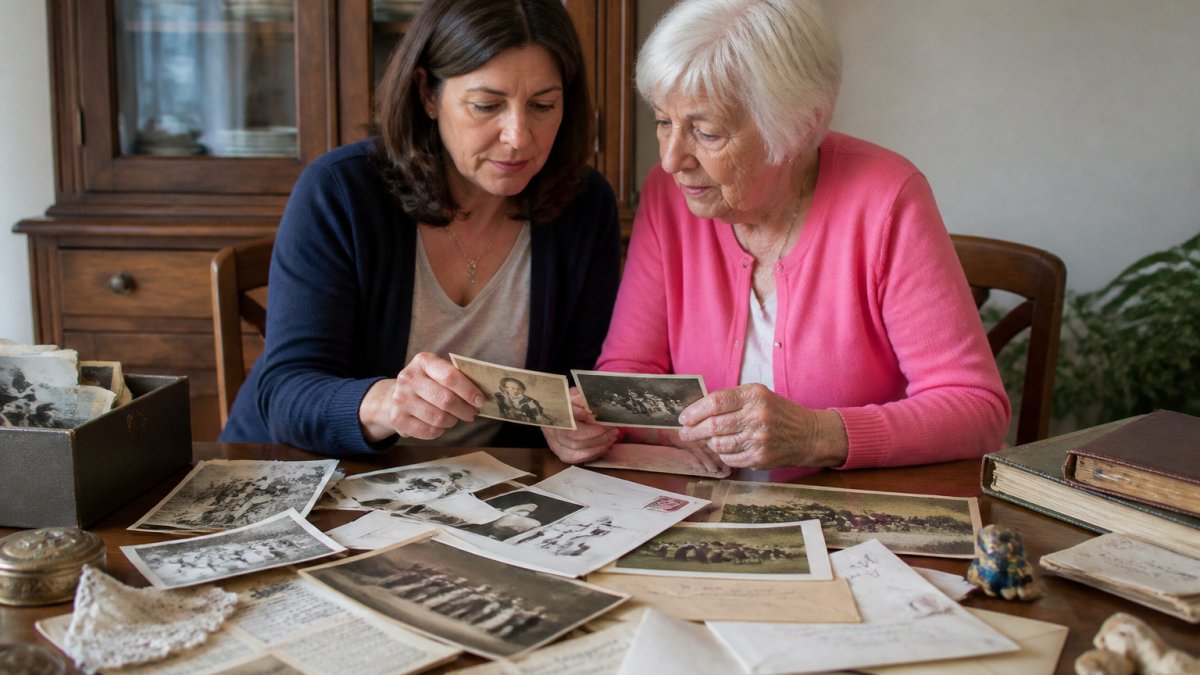
Start by separating sentimental items from everything else. Before worrying about what to sell, donate, or discard, identify the belongings that genuinely matter.
Involve the senior in the process whenever possible. If a parent is moving to assisted living, their input on what matters most shapes the entire decision.
For items with unclear value or meaning, use these sorting criteria:
- Does it fit in the new space?
- Do multiple family members want it, or just one?
- Is it in good condition and usable?
- Does it require special storage or care?
- Would it genuinely be used or displayed in the new home?
Many families discover that items they thought were valuable, old furniture, collections, clothing, actually have little resale value. The emotional weight of an object rarely matches its market price.
A common mistake is trying to sort everything at once. Tackle one room or category at a time.
Estate Cleanout Services: What Happens to Your Belongings
Once sorting is complete, the actual cleanout begins. This is where estate transition services handle the heavy lifting, physically removing items, coordinating sales, arranging donations, and managing disposal.
A professional estate cleanout typically follows this sequence:
- Removal of items designated for sale (staged, photographed, listed)
- Coordination of estate sales or auctions for valuables
- Donation pickup for items families want to give away
- Junk removal and responsible disposal of remaining items
- Deep cleaning of the empty space
- Documentation and photos for insurance or estate records
The key is ensuring that valuable items are properly appraised before sale. A certified appraiser ensures that antiques, collectibles, artwork, or other valuable items are priced fairly based on current market conditions, not quick-sale desperation. Estate sale services maximize the value of every item in your home through professional appraisal and strategic marketing.
When choosing an estate cleanout provider, verify their credentials. Look for certified appraisers (such as Canadian Personal Property Appraisers), licensed real estate professionals, and references from previous clients. A provider combining real estate expertise with appraisal credentials can handle both the sale of the home itself and the liquidation of its contents, a significant advantage over hiring separate vendors.
You can access dedicated estate sale services that maximize value for items being cleared, ensuring fair market pricing for belongings.
Senior Downsizing Services: Moving to a Smaller Home or Retirement Facility
Downsizing is fundamentally different from clearing an estate after loss. A senior is actively choosing what to bring into a new chapter. The emotional tone is about transition and fresh starts rather than loss and obligation.
Effective downsizing services start with realistic space planning. A typical retirement apartment or assisted living suite has a fraction of the square footage of a family home. What fit comfortably in a four-bedroom house simply will not fit in a one-bedroom apartment.
Tell Us About Your Situation →
Professional downsizing coordinators help seniors:
- Measure and visualize the new living space
- Photograph and document furniture before and after
- Arrange professional movers
- Stage and sell items that don’t fit
- Coordinate donations and disposal
- Help unpack and arrange the new home
The emotional benefit of downsizing services is significant. Many seniors feel anxious about leaving a home where they raised a family or lived for decades. A compassionate downsizing coordinator validates that feeling while helping them see the practical advantages of a smaller, easier-to-maintain space.
You can explore downsizing services that help you move to a smaller home or retirement facility to understand how professional support makes the transition smoother.
Choosing the Right Estate Transition Provider for Your Situation
Not all estate transition services are created equal. The difference between a good provider and a poor one often comes down to credentials, experience, and how they handle complex situations.
Start by verifying professional credentials. A qualified estate transition provider should hold:
- Certified Canadian Personal Property Appraiser (CPPA) designation or equivalent
- Real estate license in your province
- Accreditation as a Seniors Agent (if working specifically with older adults)
- Certified Executor Advisor credential (if handling estate administration)
These credentials matter because they indicate formal training, ongoing education, and accountability to professional standards. A provider without these qualifications may offer lower prices, but the risk of undervaluing items or mishandling the process often outweighs any savings.
Experience with complex situations is equally important. A typical estate cleanout is straightforward. But some situations are messier. A senior who was a hoarder may have thousands of items mixed with genuine valuables. A family in conflict may disagree about what should be kept, sold, or given away.
Ask potential providers about their process for:
- Handling family disagreement or conflict
- Appraising and pricing items fairly
- Managing urgent timelines (moving in 10 days)
- Working with hoarding situations
- Coordinating with real estate agents if the home is for sale
- Providing transparent cost estimates upfront
Contact the Brian Price team to discuss your specific situation and request a quote.
You can contact the Brian Price team and request a quote to discuss your specific situation and understand how comprehensive support works.
Starting Your Estate Transition: Next Steps and Timeline
Beginning an estate transition can feel overwhelming. The sheer volume of decisions, combined with emotional weight and time pressure, often paralyzes families into inaction.
Phase 1: Assessment (Week 1)
Meet with a professional to evaluate the scope of work. How many items need to be handled?
Phase 2: Planning (Week 2)
Create a detailed plan. Which items will be kept? Which will be sold? Which will be donated or disposed of?
Phase 3: Execution (Weeks 3-6)
Begin the actual work. Sort and remove items according to plan. Arrange appraisals for valuables. Coordinate sales, donations, and disposal.
Phase 4: Completion (Week 6+)
Final walkthrough, cleanup, and setup in the new space. Confirm all items have been properly handled.
The entire process typically takes 4-8 weeks depending on the size of the estate and complexity of the situation. Learn how much an estate cleanout costs to understand what your specific situation requires. Families with urgent timelines require expedited support, which is possible but requires immediate action and professional coordination.
Before you start, understand what costs typically involve. Pricing depends on the quantity of belongings, the timeline, and the services required.
An estate transition is one of life’s major milestones.
Estate transitions typically unfold in four phases, each with specific goals and timelines.
| Phase | Focus | Timeline |
|---|---|---|
| Assessment | Evaluate scope, timeline, valuables, and budget | Week 1 |
| Planning | Decide what to keep, sell, donate, or dispose of | Week 2 |
| Execution | Sort items, arrange appraisals, coordinate sales and donations | Weeks 3-6 |
| Completion | Final walkthrough, cleanup, and setup in new space | Week 6+ |
Frequently Asked Questions
What does an estate transition service actually do?
Estate transition services for seniors combine multiple support areas into one coordinated process. A full-service provider handles downsizing decisions, sorting and organizing belongings, arranging removal and disposal, managing estate sales or auctions, and coordinating real estate services if the home is being sold. Many also provide emotional support and family guidance through a difficult transition. The goal is to reduce stress by managing every detail, from deciding what to keep to ensuring fair market value for items being sold, under one point of contact.
How long does a typical senior transition take from start to finish?
A complete estate transition typically spans 4 to 12 weeks, depending on the size of the home, the complexity of sorting decisions, and whether the property is being sold. Urgent situations can be compressed with additional resources, though this requires realistic expectations about what can be accomplished. Planning begins with a needs assessment and inventory, moves through sorting and removal phases, and concludes with final sales, cleanout, and the physical move. Discussing your timeline upfront with a provider ensures the plan is achievable.
How do I know an estate transition provider is getting fair market value for my belongings?
Look for credentials that verify appraisal expertise. A Certified Canadian Personal Property Appraiser (CPPA) has completed formal training and follows professional standards for valuation. Ask how items are priced, whether through individual appraisals, comparative market research, or auction estimates. Reputable providers are transparent about their methods and can show you comparable sales for similar items. Request references from previous clients and ask specifically about their experience with valuable or collectible items. Avoid providers who rush valuations or offer flat fees without inspecting what they’re appraising.
What happens if my family can’t agree on what to keep or sell?
Family conflict over estate items is common, and experienced transition providers are trained to facilitate these conversations. A neutral third party can help families discuss sentimental value versus practical needs, prioritize what matters most, and find compromises. Some providers offer mediation support as part of their service. Before items are sorted or sold, establish a clear decision-making process, for example, each sibling gets first choice of certain categories, or items of high sentimental value are photographed so everyone has a record. Setting these boundaries early prevents conflict and speeds up the transition.
