

Last Updated: November 21, 2026
Quick Summary
To manage estate property assets, start with the will, confirm the executor’s legal role, and build a complete inventory of every asset, noting which ones must go through probate. Protect the property, value each asset as of the date of death, and settle debts before distributing anything to beneficiaries.
- Locate the original will and confirm the executor is willing and able to act before touching any property.
- Record each asset’s ownership type to separate probate assets from those that pass outside the estate.
- Protect the property with changed locks, controlled heat, secured valuables and regular inspections.
- Obtain dated valuations for significant assets and keep documentation for each value used.
- Pay valid debts from estate funds before distributing anything to beneficiaries.
Table of Contents
- Start With the Will and the Executor’s Legal Role
- Build an Estate Asset Inventory Checklist
- How to Protect Estate Property Until It Is Settled
- Valuing Assets and Settling Debts
- Selling a House as Executor: Timing, Probate and Sale
- Clearing Out Belongings and When to Hire Estate Cleanout Services
- Next Step: Get Help Organizing Your Estate Property
- Frequently Asked Questions
Start With the Will and the Executor’s Legal Role
Managing estate property assets starts with one document: the will. Before you touch a single item in the home, locate the original will, confirm who the executor is, and understand what that role legally requires.
The executor is responsible for protecting the estate, identifying its assets and liabilities, and distributing what remains according to the will (What to do when someone dies: Representing someone who died). Probate and the grant of representation are governed by provincial rules, so check the requirements in the province where the deceased lived (What to do when someone dies: Estates and wills).
Step-by-step starting point:
- Locate the original will and any codicils. Keep the original safe.
- Confirm whether the named executor is willing and able to act.
- Identify the province of residence and the relevant probate rules.
- Notify family members and beneficiaries of the death and the executor’s appointment.
- Begin a written record of every action you take on the estate’s behalf.
A common mistake is distributing or selling property before the grant of representation is issued. For a full breakdown of each responsibility, see our Estate Executor Duties Checklist 2026: Step-by-Step Guide.
Build an Estate Asset Inventory Checklist
An asset inventory is the foundation of every decision that follows.
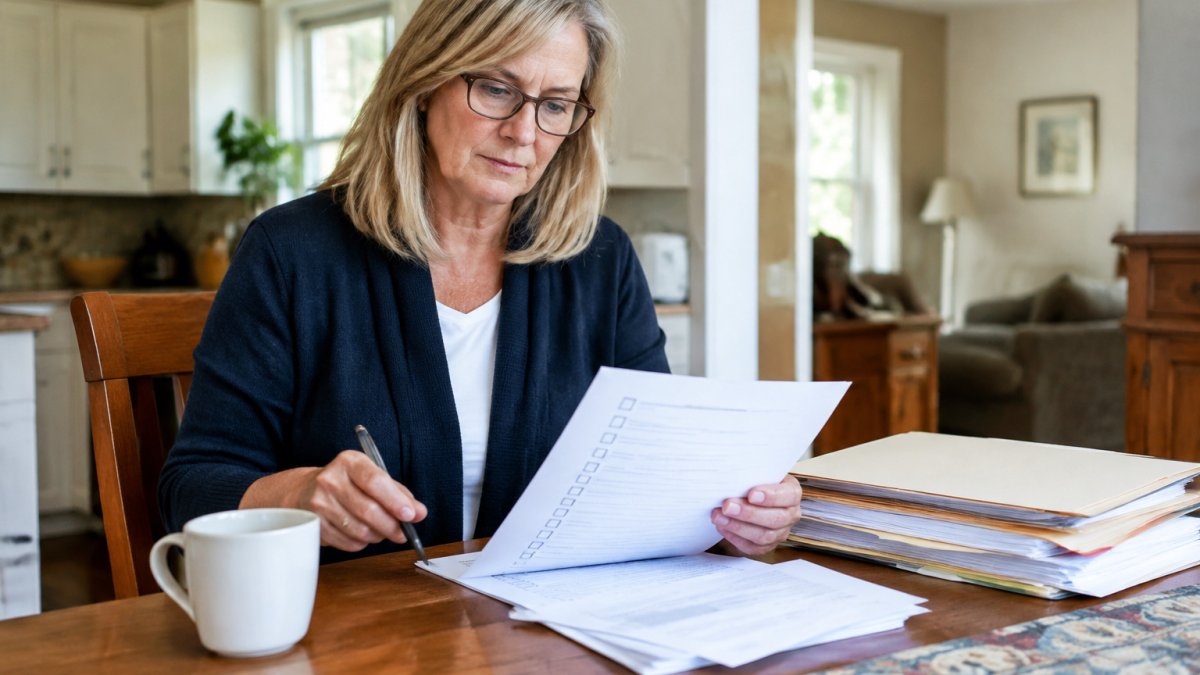
!An executor sitting at a kitchen table in a family home, reviewing a printed checklist beside a stack of folders, documents and a cup of coffee
An inventory works best when it is kept as a small set of registers, such as an asset register, a liability register, a document checklist and a transaction ledger.
Fields to record for every asset:
- Asset class (real estate, financial, personal property, digital, business interest)
- Description and location
- Institution or holder, with the account number partially masked
That last field is where most inventories go wrong. Not every asset passes through the estate.
Real Estate, Bank Accounts and Investments
Real estate, financial accounts and investments often carry the highest value and the most paperwork. Pull the land title or property deed, recent property tax statements and any mortgage documents.
Record each account with the institution name, account type, account number (partially masked in your notes), and the beneficiary designation if one exists. For registered plans, note whether a successor holder or beneficiary is named, because that designation can determine whether the plan passes outside the estate.
Personal Property, Collectibles and Digital Assets
Household contents, collectibles and digital assets are easy to overlook and difficult to value. Walk through each room with a camera or phone and photograph everything of possible value, including furniture, art, jewellery, tools and electronics.
Digital assets deserve their own section on the inventory. Make a list of online banking logins, email accounts, cloud storage, subscriptions, cryptocurrency wallets and social media accounts.
Business Interests and Assets Held Elsewhere
If the deceased owned a share of a business, a partnership interest or property in another province or country, list it separately. These assets often need their own valuation, their own tax treatment and, in some cases, a separate grant of authority in the jurisdiction where the asset sits. Note the governing documents, the ownership percentage and any buy-sell or shareholder agreement that may control what happens to the interest.
Keep the Inventory Current
An inventory is a living document. Update it whenever an asset is sold, a debt is paid or a valuation is revised, and date every change. A transaction ledger that records each payment in and out of the estate, with the date, payee, amount and purpose, will save hours when you account to the beneficiaries or file with the court.
The inventory fields below are the ones the article recommends recording for every asset.
| Field | Why it matters | Note |
|---|---|---|
| Ownership type | Shows what the executor must administer | Solely owned, jointly owned, or beneficiary-designated |
| Estimated or appraised value | Sets the value as of the date of death | Record the value as of the date of death |
| Supporting document on file | Backs up each entry | Statement, deed, appraisal, or photo |
| Likely to require probate | Separates probate assets from those that transfer automatically | Jointly held and beneficiary-designated assets may pass outside probate |
How to Protect Estate Property Until It Is Settled
Once the inventory is underway, the next priority is keeping the property safe. An empty or partly empty home is a target for theft, vandalism and weather damage, and insurance coverage often changes once a property is left unoccupied for a set period.
Practical protection steps include:
- Changing the locks and restricting key access to the executor and any approved helpers.
- Keeping heat or air conditioning at a level that protects against freezing pipes, mould and damage to furniture.
- Removing valuables and important papers to a secure location, such as a bank safety deposit box.
A common mistake is assuming the estate’s bills will pay themselves. Property tax, utilities and insurance continue during the estate period, and missed payments can lead to penalties or a lapse in coverage.
Valuing Assets and Settling Debts
Valuation determines both what the estate is worth and how the beneficiaries are treated.
Valuation methods by asset class:
- Real estate: a licensed appraisal is the most defensible approach, and a comparative market analysis from a realtor can serve as a supporting estimate. Record the valuation date, the appraiser’s credentials and the comparable sales relied on.
- Bank and investment accounts: use the statement closest to the date of death and note the balance on that date. For publicly traded securities, the closing price on the valuation date is the usual reference.
- Registered plans: obtain the plan statement as of the date of death and confirm whether a beneficiary or successor holder was named, since that affects both value and distribution.
Where a value is uncertain or likely to change, say so in writing and explain the basis for the estimate.
Debts are settled before anything is distributed.
How to approach valuation and debt settlement:
- Obtain written valuations for significant assets, dated as close to the date of death as possible.
- Gather statements for every debt and confirm the balance owing as of the date of death.
- Calculate the net estate by subtracting debts and expenses from total assets.
- Keep a ledger of every payment in and out of the estate, with dates and receipts.
- Hold back enough funds to cover final taxes and administration costs before distributing.
Consider involving a qualified appraiser early. Their documented values protect the executor if a beneficiary later questions a decision.
Selling a House as Executor: Timing, Probate and Sale
Selling a home is often the largest single transaction in an estate, and it usually cannot begin until probate or the grant of representation is in place.
The executor generally needs authority from the court or the estate’s legal documents before signing a listing agreement or accepting an offer.
Before listing, prepare the property with the same care you would give any sale. Remove clutter, address obvious repairs and document the condition with photos.
Clearing Out Belongings and When to Hire Estate Cleanout Services
Clearing a home is often the most emotionally difficult part of managing estate property. Decisions about heirlooms, furniture and sentimental items can strain family relationships, and the physical work of sorting decades of belongings can take far longer than anticipated.
Start by sorting items into four groups: keep for beneficiaries, sell, donate, and discard. Set aside anything valuable or documented before the rest of the home is emptied. When siblings disagree about what to keep, a neutral third party can often help the group reach a decision.
Many families decide that professional help is worth the cost. Full-service options are described in Full-Service Estate Clean Out That Handles Everything After Life’s Hardest Moments, and estate sale services that maximize the value of items found in the home are covered in Estate Sale Services That Maximize the Value of Every Item in Your Home.
Costs vary widely with the size of the home and the volume of contents. For a general sense of what estate cleanouts involve, see How Much Does an Estate Cleanout Cost in Windsor? (2026 Guide), and request a quote for your specific situation before committing.
Next Step: Get Help Organizing Your Estate Property
Managing estate property is a demanding task, and no executor should have to carry it alone. Whether you need help with the inventory, valuation, the sale of a home or clearing out the belongings, a structured plan makes each stage manageable.
Brian Price provides an all-in-one estate transition service that covers clean outs, estate sales and real estate, with certified appraisal support. If your situation feels overwhelming, reach out to Brian Price to talk through the next steps. Request a quote from Brian Price and we will help you decide what needs to happen first.
Frequently Asked Questions
What should an executor do first when managing estate assets?
Start by locating the original will and confirming who the named executor is. Then secure the property: change locks on the home, arrange home insurance that covers a vacant or estate property, and gather bank statements and deeds. Notify the financial institutions holding accounts so they freeze activity where needed. Keeping a dated log of every action protects you if a beneficiary later questions a decision.
How do you make an inventory of estate property and assets?
Work room by room and category by category: real estate, bank and investment accounts, vehicles, personal property, collectibles, insurance policies and digital accounts. Record each item with a description, location, photograph and an estimated value. Note the date of death for each valuation, since that date usually sets the cost base for the estate. Keep receipts, statements and appraisals together in one file so the inventory can be shared with beneficiaries and the court if needed.
Can an executor sell estate property before probate is granted?
In most cases an executor should wait until the estate trustee certificate is issued before selling real estate or transferring significant assets, . Some perishable or deteriorating items may be sold earlier to protect value, but record the reason and keep proof of the sale price. Selling early without authority can expose the executor to personal liability, so confirm the approach with a lawyer first.
How are estate assets distributed to beneficiaries?
Distribution happens after debts, taxes, probate fees and administration expenses are paid. Assets pass according to the will, or under the applicable provincial rules if there is no valid will. Executors should prepare an accounting showing receipts, disbursements and the proposed distribution, and obtain releases from beneficiaries where possible. Holding back a reserve for final tax filings and unexpected claims is a common practice before the final payout.
What expenses can be paid from estate assets?
Reasonable expenses of administration can usually be paid from the estate, including funeral costs, outstanding debts and taxes, insurance, utilities and maintenance on the property, legal and accounting fees, and the cost of an appraiser or estate sale service. Keep every invoice and receipt, and avoid paying personal expenses from estate accounts. Clear records make it much easier to justify each payment to beneficiaries.
How long does it take to settle an estate?
Settling an estate often takes many months and can take a year or more, depending on whether there is a will, how complex the assets are, whether real estate must be sold, and how quickly the probate process moves. Estates with disputes or hard-to-value collectibles tend to take longer. Starting the inventory and protection steps early helps keep the process moving.
Should an executor hire estate cleanout services?
Hiring a service makes sense when the home is full, the timeline is tight or the items include valuable antiques and collectibles that need certified appraisal. Ask providers whether they hold relevant credentials, how they determine fair market value, and how they handle sorting, removal and disposal. Pricing depends on the size of the home, the volume of belongings and the services needed, so request a quote from Brian Price for current pricing.
What should an executor do with personal belongings in an estate?
Photograph and inventory belongings before anything is removed. Check the will for specific gifts, then offer sentimental items to beneficiaries in a documented way. Items of value should be appraised before sale. Anything that is unwanted can be donated or disposed of responsibly, with receipts kept. Where family members disagree, a neutral third party can help facilitate decisions and reduce conflict.
